Dutch Fort
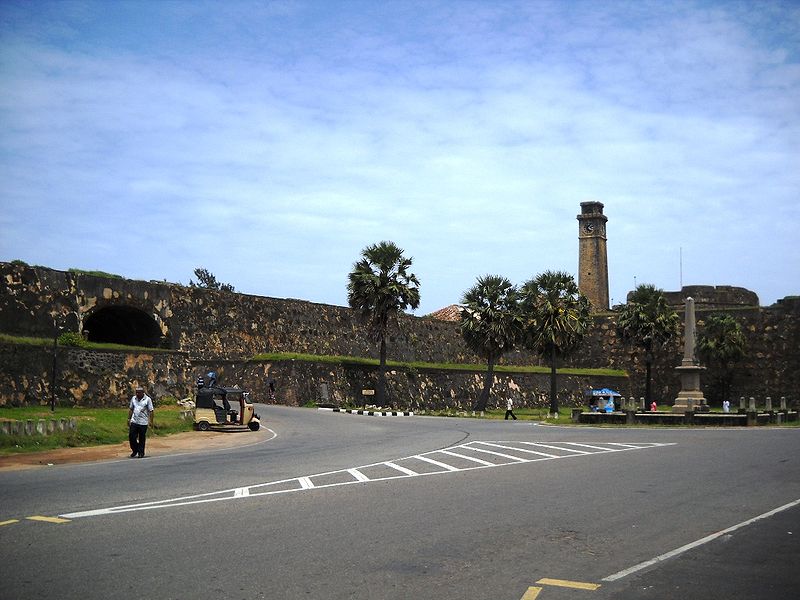
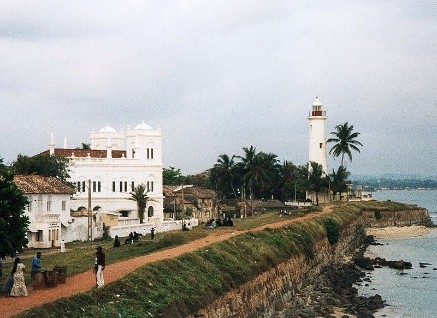
A continuous rampart, built by the Dutch from mid 17th century onwards and added to by the British, encircles the city, interrupted by 14 massive bastions. The best way to see the fort is to walk the length of the walls (90 minutes), and the best time to do it is during the evenings. Start at the most impressive section, where the Star, Moon and Sun bastions glower forbiddingly over the neck of the peninsula. The ramparts south of the harbour are pierced by the Old Gate, above which is a British Coat of Arms (on the inner side, the gate is crowned by the initials of the Dutch East India Company, VOC, and its coat of arms), and south of the harbour the Zwart (Black) Bastion is believed to be the only surviving part of the original Portuguese fortifications. The circuit of the walls continues via the Akersloot and Aurora bastions to the Point Utrecht bastion, topped by a modern lighthouse, then to Flag Rock, the southernmost point of the walls, before looping back north through the Triton, Neptune, Clippenberg and Aeolus bastions. The final section between the Aeolus and Star bastions is closed, as it is part of a military base. While some of the bastions retain their original Dutch names, the Triton, Aeolus, Neptune and Aurora bastions were renamed by the British in honour of the Royal Navy ships of the line which took part in the British seizure of Sri Lanka from the Dutch during the Napoleonic Wars.
 |  |
Unawatuna Beach
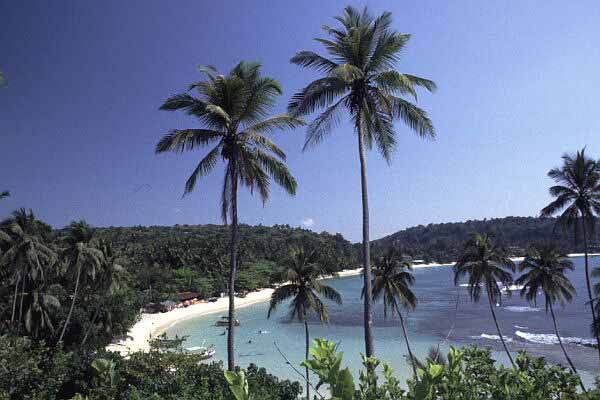
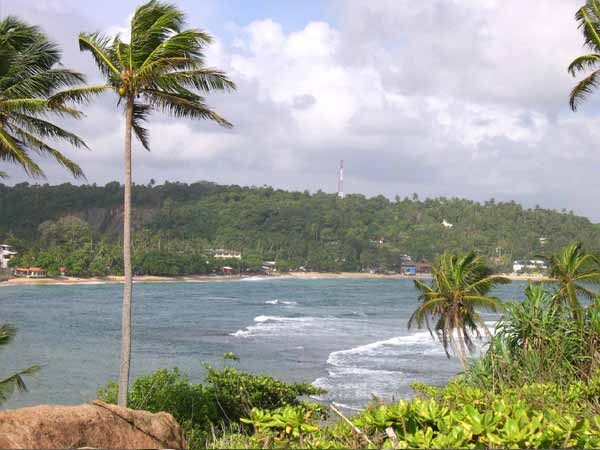
Unawatuna, less than 5km’s southward around the coast of Galle, is a beach resort waiting to happen. This 4km sweep of palm-fringed sand - said by some to rank amongst the twelve best beaches in the world - would no doubt already have gone the way of Beruwala, Bentota and Hikkaduwa. As it is, Unawatuna, even though no longer the well-kept secret of a handful of die-hard backpackers and divers, is still far from being over-developed. Attractions include sheltered waters for swimming, and an accessible, reasonably well-preserved coral reef for snorkeling. For scuba divers, there are several wreck dives only 20-30 minutes away from the beach by boat.
 |  |
Rumassala
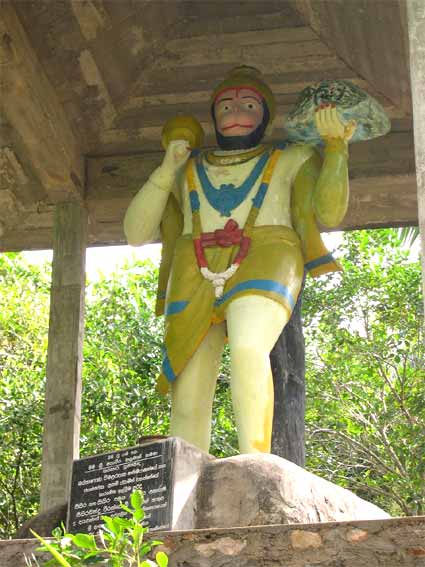
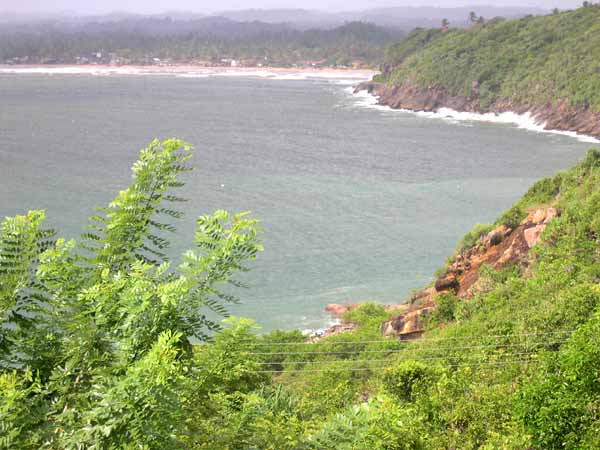
Rumassala, known to colonialists as Buona Vista, is the subject of many legends. It features in the Ramayana, as the home of the beautiful queen Sita, hidden in the jungle nearby. Hanuman who was sent to fetch a medicinal plant for a wounded soldier, was unable to find it and brought the Himalayan mountains on which it was said to grow. He dropped a chunk at Unawatuna ('here it fell') to form the present mountain, where many medicinal plants still grow. There is a major magnetic anomaly near Unawatuna, which Arthur C. Clarke attributes to a meteorite strike, and it is said that satellites lose their orbits with unusual frequency overhead. The Portuguese had a dreadful reputation in Sri Lanka as looters and pirates, and are said to have given false light signals from Rumassala to lure unsuspecting Arab trading ships onto the rocks
 |  |
Gallle International Cricket Stadium
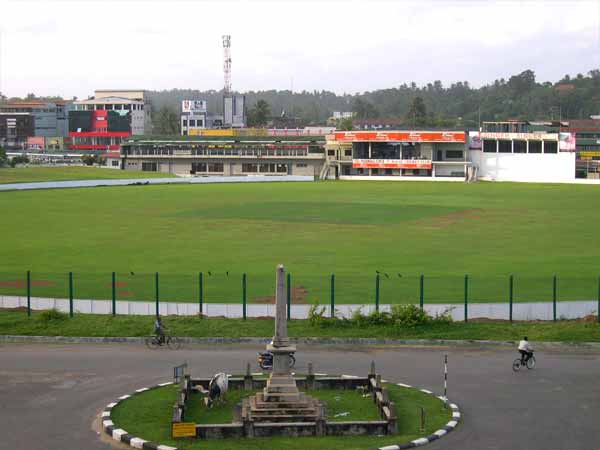
Galle International Stadium, situated 116km south of Colombo, is one of the world’s most beautiful cricketing venues. A 200-year-old UNESCO protected Dutch fort provides a dramatic backdrop for the breathtaking view of the glistening Indian Ocean in the distance. The venue played its first first-class match in 1984 and its inaugural Test match in 1997/98 when Sri Lanka took on New Zealand.
HIGHLIGHTS
SRI LANKA Vs. ENGLAND (2003)
It may have been guarding Sri Lanka's southern coastline for the best part of 400 years, but the old Dutch fort at Galle can rarely have witnessed a more magnificent backs-to-the-ramparts effort than England's tailenders produced to save the first Test. From a position of apparent hopelessness at lunch on the final day, England rallied sufficiently to cling to their positions until nightfall, before being airlifted to Kandy on Sunday in a military helicopter, with their spirits at a higher ebb than at any other stage this winter.
It was a match in which an English defeat ought to have been a formality, especially after losing the toss at Muttiah Muralitharan's most prolific hunting-ground. Instead, they held out, and for all the brave words being uttered publicly by the Sri Lankan players and officials, their failure to break through England's defenses has been a shattering disappointment. On a local radio phone-in on Sunday afternoon, the presenter referred bleakly to "Sri Lanka's defeat" on more than half-a-dozen occasions, and not one single caller felt the need to correct him.
By escaping with a draw, England are already in a stronger position in this series than they were two years ago, when Kandy was the venue for one of the most explosive Test encounters in recent years. England eventually won a nail biter by just three wickets, although the result said nothing of the main incidents of the match - dodgy umpiring that brought even the mild-mannered Sanath Jaysuriya to the brink of apoplexy, a finger-jabbing face-off between Kumar Sangakkara and the rarely ruffled Mike Atherton, and most crucially of all for England, a hard-fought (if fortunate) century by Nasser Hussain, which brought an end to the most desperate run of form of his career.
Sri Lanka 1 Sanath Jayasuriya, 2 Marvan Atapattu, 3 Kumar Sangakkara (wk), 4 Mahela Jayawardene, 5 Tillekaratne Dilshan, 6 Hashan Tillakaratne (capt), 7 Thilan Samaraweera, 8 Kumar Dharmasena, 9 Chaminda Vaas, 10 Dilhara Fernando, 11 Muttiah Muralitharan.
England 1 Michael Vaughan (capt), 2 Marcus Trescothick, 3 Mark Butcher, 4 Nasser Hussain, 5 Graham Thorpe, 6 Andrew Flintoff, 7 Chris Read (wk), 8 Gareth Batty, 9 Ashley Giles, 10 Richard Johnson, 11 Matthew Hoggard.
Australian Tour of Sri Lanka - 2004
The mighty Aussies took on the Sri Lankan lions on the 5th & 12th of March, 2004 at the Galle International Cricket Ground. The 1st test played at Galle was a high scoring one with the Aussies clinching the match much to the dismay of the local supporters.
1st Inn - AUS 220/all out, 68.3 overs
1st Inn - SL 381/all out, 136.4 overs
2nd Inn - AUS 512/8 [declared], 152.0 overs
2nd Inn - SL 154/all out, 45.2 overs
Result: Australia won by 197 runs.
 |  |
Galle Museum
Galle Cultural Museum
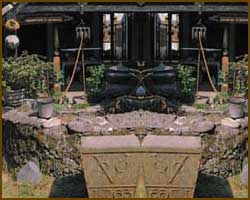
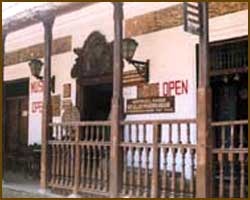
Within the Fort of Galle in a Dutch Colonial building in Church Street is the Cultural Museum adjoining the New Oriental Hotel. The artifacts reflect the art and culture of the Southern Province.
The National Maritime Museum, Galle
Located within the Fort of Galle in a colonial Dutch ware-house with imposing pillars, this museum displays the fauna & flora of the sea. Artifacts consist of preserved material and scaled down models of whales and fishes. Generally, all the resources of the sea are displayed in this Museum.
It also shows in diorama form with life sized models, the traditional methods of fishing. Some artifacts of underwater archaeology are also on display. An interesting experiment is the 'walk-into-the sea' diorama, showing the natural coral beds, sea grass beds and deep sea fishes.
Finally, one leaves the museum seeing the causes of sea pollution, coast erosion and methods used to combat these problems.
 |  |
Koggala
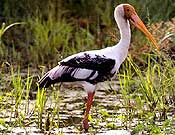
Hometown of a famous local writer Martin Wickramasinghe. The museum of Folk, Art & Culture built in his honour at his old residence has an excellent display of local folk items. They include the costumes of folk dancers, sports items, household items and furniture and vast arena of the folk life of the early 20th century. Take a boat trip in the lagoon and Kogggala Lake to see many of its small islands, which is a popular destination for bird watching.
 |  |
